

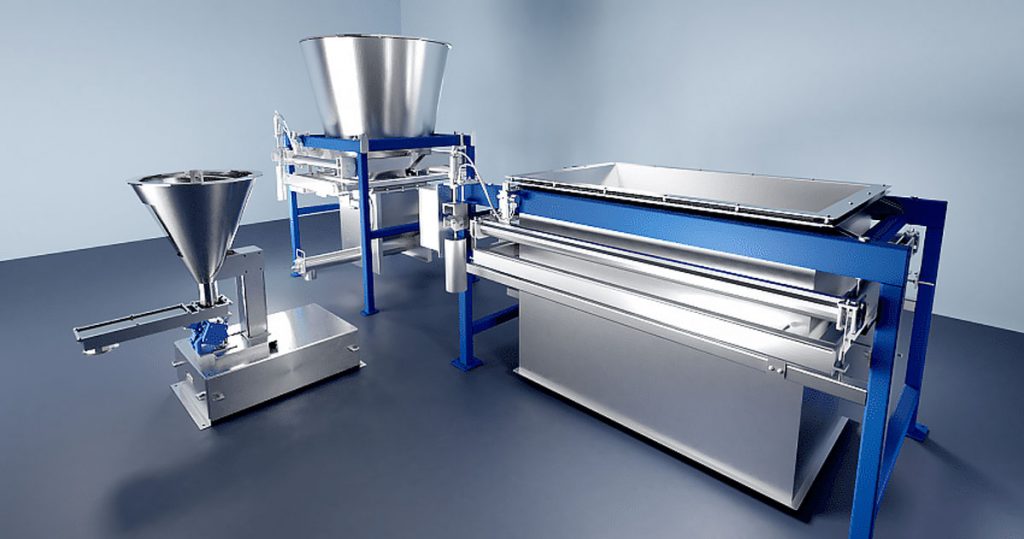
Thayer Scale’s loss-in-weight feeders deliver precise, consistent ingredient control across any material, with easy calibration and built-to-survive reliability.
With over 75 years of experience, we offer the largest range of loss-in-weight feeders of any manufacturer. All of our feeders offer integrated material agitation options, specialized auger designs and a wide range of proprietary feed algorithms to ensure reliable feeding of even the most difficult materials. When paired with one of Thayer Scale’s rugged, counterbalanced platform or cable scales, the combination is a robust gravimetric feeding solution that integrates seamlessly into existing plant processes.
Discover Thayer Scale’s Full Range of Loss-In-Weight Feeders
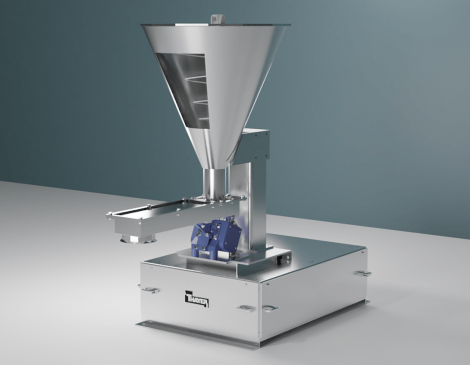
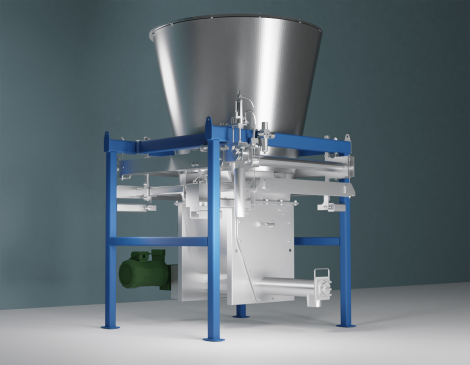
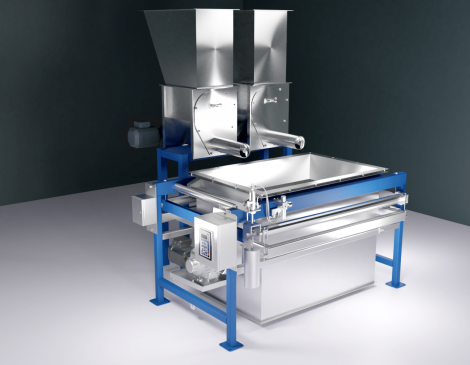
Achieve consistent, reliable metering at the desired flow rate with our volumetric feeding subsystem
Powered by our volumetric feeding subsystem, our loss-in-weight feeders provide consistent, reliable metering of the target material at desired flow rates. To this volumetric feeder, we pair a fully mass-counterbalanced platform or cable suspension scale for maximum signal and accurate, reliable weight measurement.
Thayer Scale’s powerful set of proprietary add-on accessories help with problematic flow issues, such as bridging, flushing, adhesion, and cohesion. In addition, our instrumentation’s powerful software routines optimize the feeder’s performance, including output compensation, disturbance control, linearization, density compensation during refill, temperature compensation, and automated calibrations.
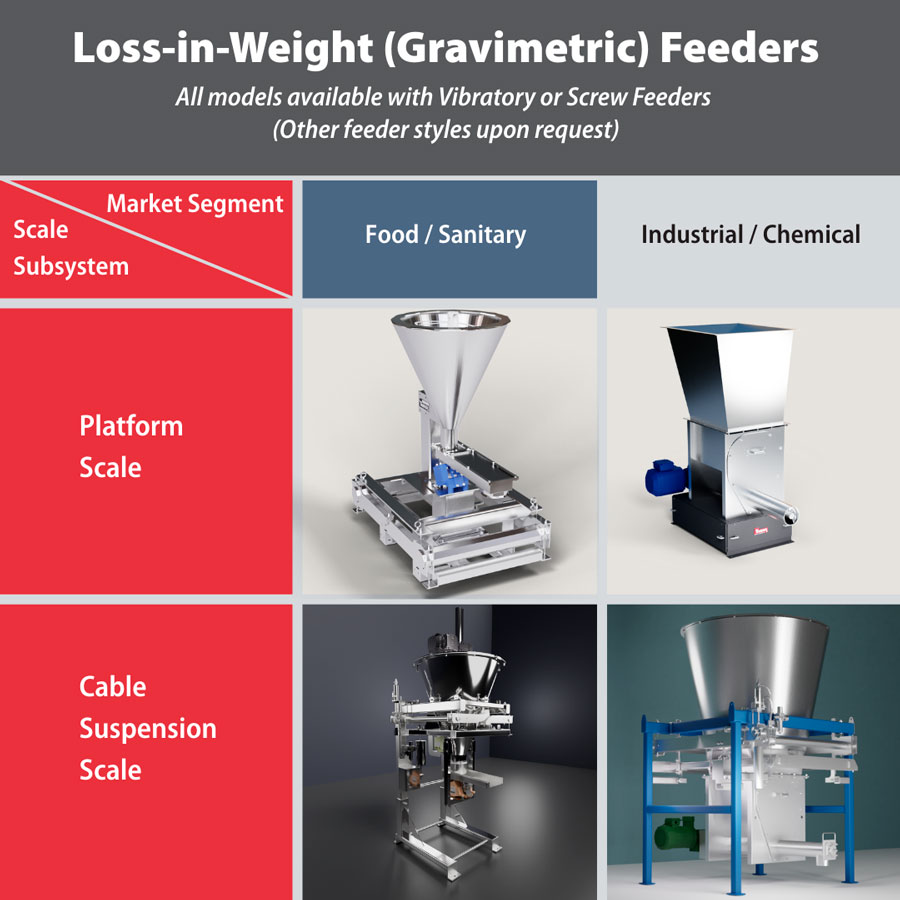
How does a loss-in-weight feeder work?
A loss-in-weight feeder is a precision gravimetric feeder that meters bulk materials by continuously measuring the reduction in weight of material over time. Unlike volumetric feeders, which deliver material based only on volume, loss-in-weight feeders use a scale to calculate actual mass flow and automatically adjust feeder speed to maintain a consistent target feed rate.
In operation, material is discharged from a hopper using a volumetric feeding mechanism—such as a screw or vibratory feeder—mounted on a high-accuracy platform or suspension scale. As material exits the feeder, the system measures the rate of weight loss and uses closed-loop control algorithms to correct for disturbances, material density changes, refill events, and environmental factors. This ensures highly accurate, repeatable feeding performance across a wide operating range.
Loss-in-weight feeders are commonly used in continuous processing, batching and blending applications where precise ingredient control is critical. They are especially effective for handling difficult materials prone to bridging, flushing, adhesion, or cohesion. Loss-in-weight feeders are the ideal solution for industries such as plastics, chemicals, food processing, pharmaceuticals, and specialty materials manufacturing.
Key Benefits of Thayer Scale’s Loss-In-Weight Feeders
🎯 Extended Operating Range
Feeds from a few grams per minute up to over 60,000 pounds/hour.
🧱 Built to Survive
Unlike lightweight designs made for short-term convenience or scale sensitivity, Thayer feeders are engineered for long-term durability, without compromising accuracy.
🧼 Fast Cleaning Access
Tool-free disassembly for rapid cleaning, product changeover and maintenance.
🌀 Gentle Material Handling
Designed not to degrade or alter the appearance of delicate or fragile materials.
⚙️ Single Load Cell Design
All forces are summed to a single load cell which can be easily accessed or replaced without removing the feeder or weigh hopper.
🔧 Tool-Free Screw Changes
Screw augers can be swapped quickly without special tools.
📐 Flexible Mounting Options
Supports floor-mounted, rotating, stationary, wheeled, forklift-based, or suspended installations.
🛡️ Completely Sealed System
A sealed system allows for improved dust control and supports inert gas purging if required.
Our Loss-In-Weight Feeders Core Technologies
⚖️ Fully Mass-Counterbalanced Platform or Cable Scale
Maximizes load cell utilization by isolating the material weight from vibration, shock, and external forces.
🔄 Integrated Material Agitation
Prevents flow issues like bridging, funnel flow, adhesion, and cohesion for consistent material feeding.
🧠 Proprietary Feed Algorithms
Advanced algorithms provide output compensation, disturbance control, linearization, density and temperature compensation, and automated calibration.
🌀 Volumetric Feeding Subsystem
Ensures precise, reliable metering across a wide flow range from a few grams per minute up to 100,000 lb/hr.
Loss-In-Weight Feeders – FAQ
Our engineers have compiled the most frequently asked questions about loss-in-weight feeders and LIW technology below.
Q: What is a loss-in-weight feeder and what is the difference between loss-in-weight (gravimetric) and volumetric feeders?
A loss-in-weight feeder is a gravimetric feeding system that continuously measures material flow by weight, not volume, to deliver precise and repeatable feed rates. By monitoring the real-time loss of weight from the feeder and automatically adjusting output, loss-in-weight feeders provide superior accuracy and control for powders, granules and other bulk materials. At the heart of every Thayer Scale loss-in-weight feeder is a scale that has been designed exclusively for the stringent requirements of loss-in-weight feeding. LIW feeders are ideal when accuracy, repeatability, and process stability are critical.
Q: How does a loss-in-weight feeder system work?
The feeder hopper sits on a mass-counterbalanced scale that allows for tracking of only the weight of the live load in real time. As material is discharged through a vibratory feeder, screw, or batching mechanism, the system calculates the rate of weight loss and converts it into a precise feedrate. Closed-loop control continuously adjusts the drive to maintain the setpoint.
Q: What types of metering technologies are available from Thayer Scale?
Vibratory feeders provide gentle, precise movement for free-flowing powders and granules, especially at low feedrates. Screw feeders offer rugged, versatile metering for cohesive or difficult to handle materials over a wide operating range. Ingredient batching systems combine LIW accuracy with automated, recipe-driven control for multi-component processes.
Q: Which loss-in-weight feeder type is best for my application?
Free-flowing, non-cohesive or fragile/friable materials typically perform well with vibratory LIW feeders. Cohesive or bridging materials often benefit from screw feeders. Multi-ingredient or formulation-driven processes are best served by ingredient batching systems. Final selection should always consider flow properties, required feed rate along with several other process goals. Our engineers can help build the right solution for your application.
Q: What feed rate accuracy can I expect?
Typical continuous flow rate accuracy ranges from ±0.25 –1% of setpoint, depending on the material and operating conditions and can be as 0.1 to 0.25% for batch applications. Because LIW feeders measure actual mass loss, they maintain stable performance even when bulk density fluctuates.
Q: How are bridging and flow problems handled?
Proper hopper design and flow aids are key. Solutions include a range of independently driven agitators and optimized hopper geometry for the materials being handled. Matching feeder technology to material behavior ensures consistent discharge and reliable feed control.
Q: Can loss-in-weight feeders integrate with plant automation systems?
Yes. Systems commonly support EtherNet/IP®, Modbus TCP/IP, ProfiNet, and analog I/O. Integrated PID control and recipe management simplify operation and allow seamless communication with existing PLC or DCS platforms.
Q: Is installation and calibration of loss-in-weight feeders difficult?
Installation is typically straightforward with standard mechanical and electrical connections. Commissioning includes calibration, control loop verification, and operator training to ensure reliable performance from start-up through production.
Q: What service and support are available?
Ongoing support includes technical assistance, spare parts, preventative maintenance guidance, and field service when needed. Thayer Scale remains available to optimize performance and troubleshoot as processes evolve.
Q. How can I verify that a loss-in-weight feeder will perform well in my application?
Always work with a manufacturer, like Thayer Scale, who maintains a comprehensive Test Lab in order to be able to run your materials in conditions simulating the actual operating environment to verify design and system requirements.